University of London
Reproductive Autonomy
Work in this area examines who decides whether a woman seeks contraception or antenatal care, and how that decision is negotiated inside the household.
Academic Collaboration
We bridge Bangladeshi ground realities with international sociological expertise, and we return the findings to the districts that produced them.
The Hub
The hub has run a household survey every year since 2018. From 2020 it became a longitudinal panel: the same households are approached for re-interview in each round, which is what allows us to describe change over time — a woman's distance to a functioning facility this year against last year — rather than publishing a fresh snapshot and calling it a trend.
Interviews are carried out by trained female enumerators recruited from the districts they work in. Consent is taken verbally in Bangla, recorded, and explained separately from any offer of care, so that declining an interview never affects whether a household is seen at a camp. Any question can be skipped, and consent can be withdrawn afterwards by contacting the research team.
Before analysis begins, direct identifiers are removed from the response file and replaced with a random participant code. Findings are published at district level. We do not release union or village breakdowns where the group is small enough for a household to be recognisable, and we do not publish an individual response in any form that names the person who gave it.
The Who
Work in this area examines who decides whether a woman seeks contraception or antenatal care, and how that decision is negotiated inside the household.
Work in this area follows what happens to a woman's access to care when a household member migrates for work, internally or overseas.
Work in this area covers reproductive health service use in dense urban settlements, where distance is short but cost, time and privacy are not.
Work in this area covers checking analysis against the underlying response file and putting findings into a form a ministry consultation can read.
Study protocols and draft instruments are submitted for peer review by collaborating faculty before a round goes to field, with the aim that our instruments meet international academic standards and that the analysis can be replicated by someone outside the organisation.
The Output
Each surveyed district receives a short brief covering its own figures, written for the civil surgeon's office and the district health team. We send it whether or not the numbers support what we expected to find.
Analyses are circulated as working papers and, where a collaborator takes them forward, submitted to conferences or journals. Acceptance is never within our gift, so we describe submissions as submissions.
Aggregate tables are released openly. The de-identified response file is intended to be released to researchers under an application and review process, described in the repository section below.
The How
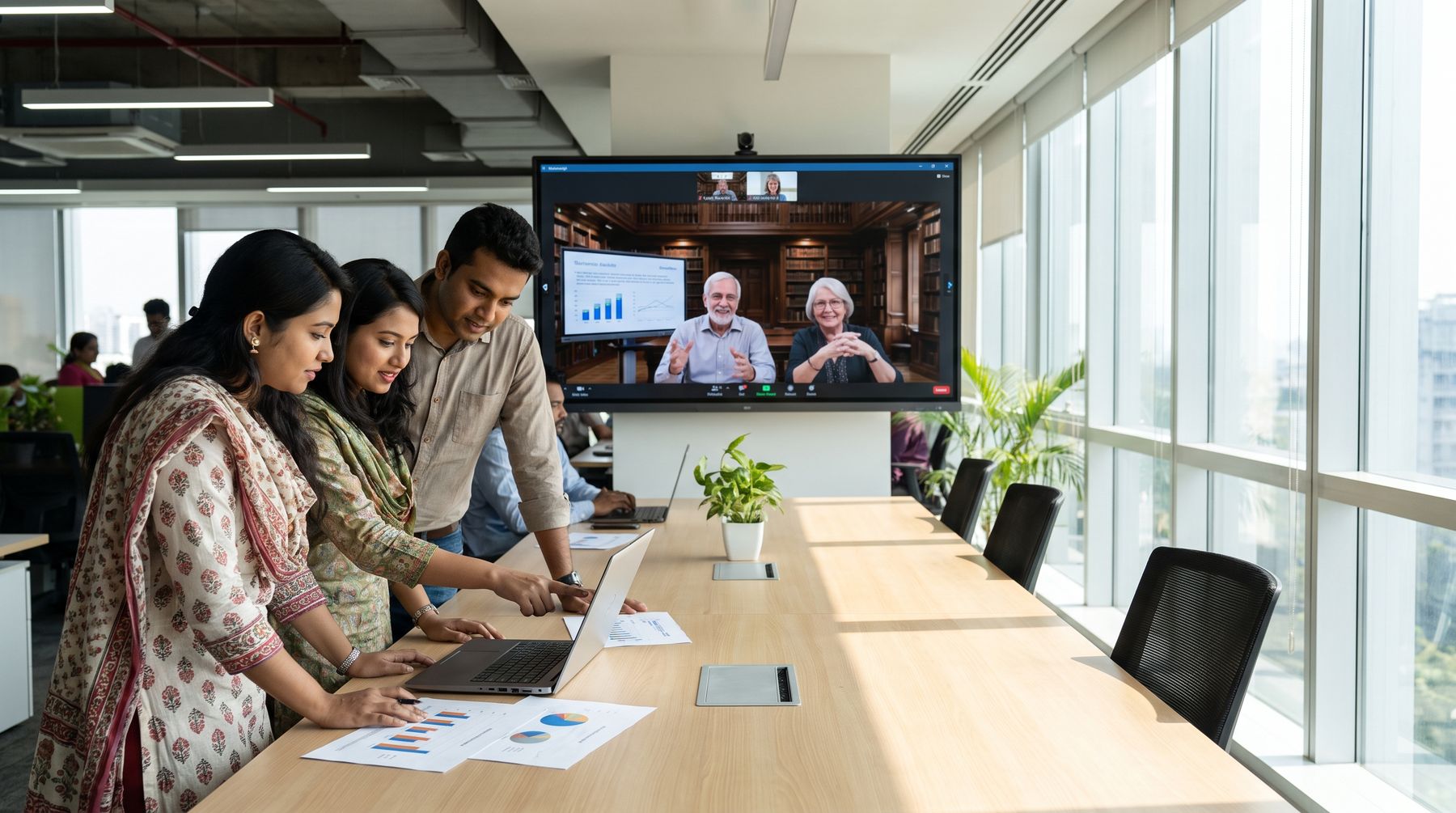
We invite PhD scholars, postdoctoral researchers and professors from UK and US universities to partner with us on fieldwork, data sharing, and co-authored publications on Bangladeshi women's sociology.
In practice a partnership begins with a scoping call and a written outline. If the question fits an existing panel round we can add a module to it; if it does not, the work runs as a separate study with its own instrument. From there we agree a fieldwork window, an ethics route, a data-handling protocol and an authorship position in writing, before anyone travels or any data moves.
What we can offer is field access in the districts where we already work, enumerator capacity and training, translation and back-translation, and support in preparing an ethics submission in Bangladesh. What we cannot offer is funding, visa or immigration sponsorship, a guaranteed authorship position, or any assurance about whether a resulting paper is accepted for publication. Those depend on funders, universities, immigration authorities and reviewers, none of whom we speak for.
Write to research@srijonifoundation.org with a paragraph on the question you are working on. An early conversation costs nothing and often saves a term.
One form, one reply. We answer every enquiry, usually within ten working days.
Data Repository
Anonymised datasets from our 2026 survey will be made available to accredited researchers in Q4 2026.
Access is by application rather than download. A request is reviewed by the research team against the stated purpose of the work, the applicant's institutional affiliation and the ethics clearance already held for it. Where a request is approved, release is conditional on a signed data-use agreement between Srijoni Foundation and the applicant's institution, not the individual.
What is released is de-identified and aggregated to district level. Union, village and household-level records are not released, because in a small district cell they can identify a woman by her circumstances alone. Re-identification, linkage against other datasets for the purpose of re-identification, and onward transfer to a third party are all prohibited by the agreement, and a breach ends access.
We would rather refuse a request than release a file that can be traced back to someone who agreed to answer questions in her own courtyard.
Next Step
Propose a collaboration if you are working on a question the panel could answer. Register for the 2026 cycle if you would rather contribute to the data itself.