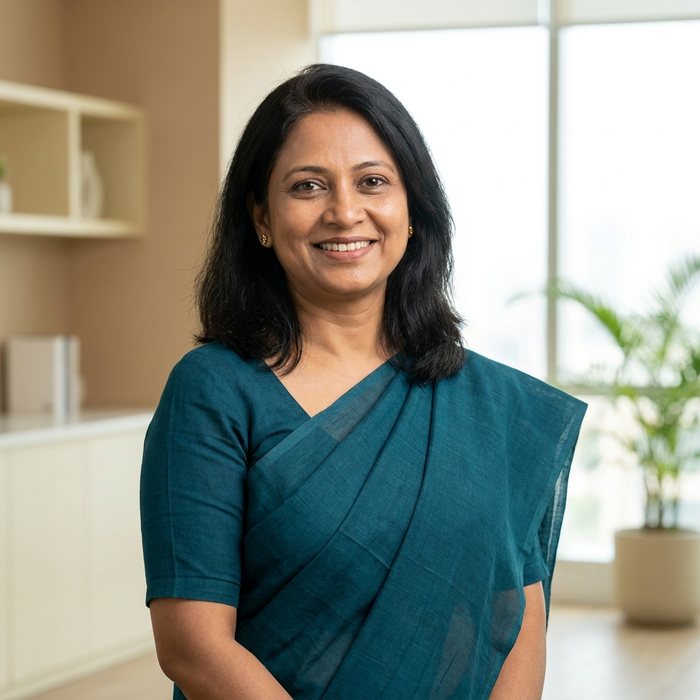
Nasrin Haque
Executive Director, Dhaka
Sociologist who spent eleven years in district health administration before co-founding Srijoni. Sets programme strategy and holds the relationship with government counterparts.
Who We Are
Srijoni Foundation sits between the village courtyard and the ministry committee room: we deliver services in the districts where women live, and we carry the resulting evidence into national policy.
Our Story
Srijoni Foundation (সৃজনী ফাউন্ডেশন) was founded in 2018 by a small group of sociologists and public health practitioners who kept arriving at the same problem from opposite ends. The clinicians were treating women whose case histories nobody was recording. The researchers were writing about districts they had no route into.
The organisation began with a single mobile health camp in Mymensingh. Over four days, the clinicians recorded questions they could not answer from the consultation alone — how far a woman had travelled, who had decided she could come, what she had been told about contraception. Our first survey instrument was written to answer those questions, not to test a hypothesis we already held.
Since then the research side of the work has been carried out in ongoing collaboration with academic colleagues at the University of Dhaka and at the International Centre for Diarrhoeal Disease Research, Bangladesh (icddr,b), who review our study designs and, where relevant, our ethics submissions.
Today the Foundation runs four connected programmes — mobile health camps, a sociological research hub, a counselling and legal helpline, and an adolescent girls' curriculum — across more than 40 districts.

How We Work
These are working rules rather than values statements: each one changes what we do on a given day, and each one is something a partner or a participant can hold us to.
We do not open a programme in a district until we have baseline data from it. Where existing figures are thin, the first visit is a listening and survey visit, and the service design follows from what that visit returns.
Participation in a survey is separate from receiving care; declining one never affects the other. Consent is taken verbally in Bangla, recorded, and can be withdrawn afterwards by contacting our research team.
Every camp is planned with the district health office and a local clinic from the start, with the aim that routine follow-up sits with them. We measure a site by what continues after our van stops visiting.
Affiliations
Registration and regulatory details are listed in full in our annual report.
Our Team
Eleven full-time staff in Dhaka, two part-time advisors abroad, and field teams contracted per camp cycle. The people below lead the four programme areas.
Executive Director, Dhaka
Sociologist who spent eleven years in district health administration before co-founding Srijoni. Sets programme strategy and holds the relationship with government counterparts.
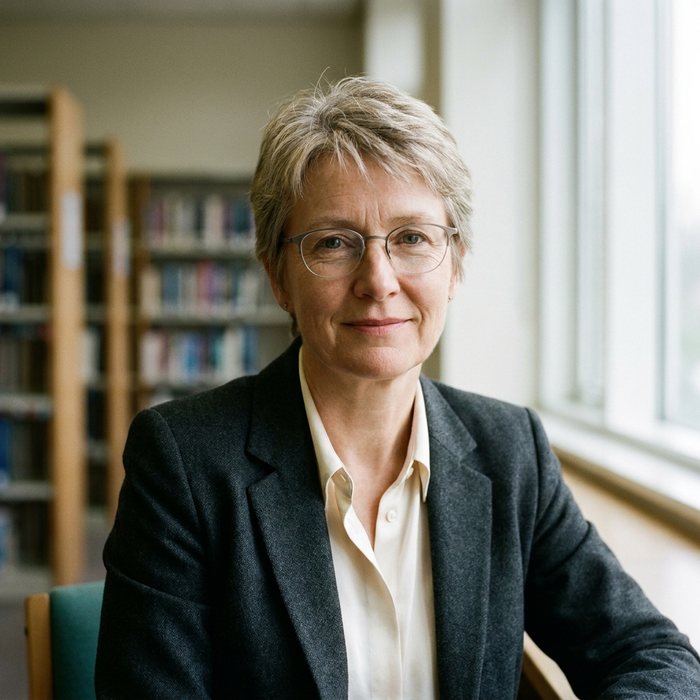
Research Advisor, London
Epidemiologist advising on study design, sampling and analysis for the longitudinal panel. Reviews every instrument before it goes to field and co-authors our published findings.
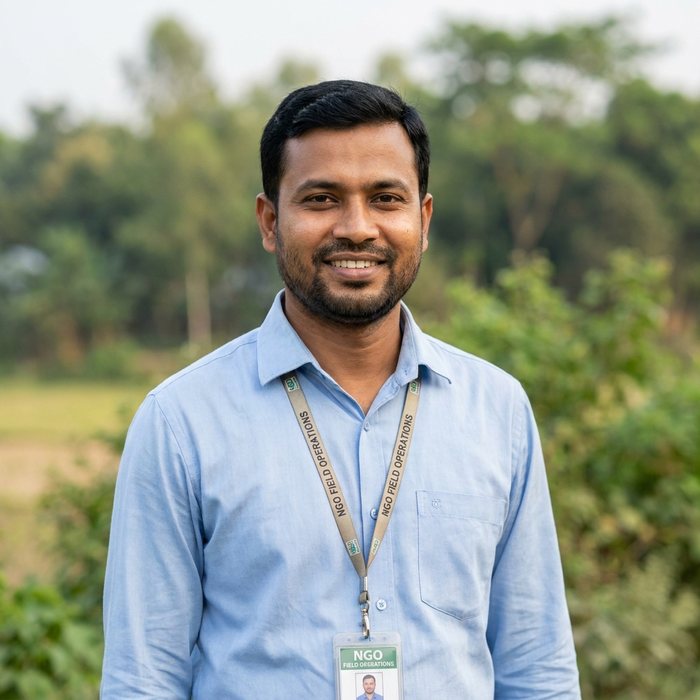
Field Operations Manager
Runs mobile camp logistics across four divisions — routing, cold chain, clinician rosters and the scheduling agreements held with each district health office.
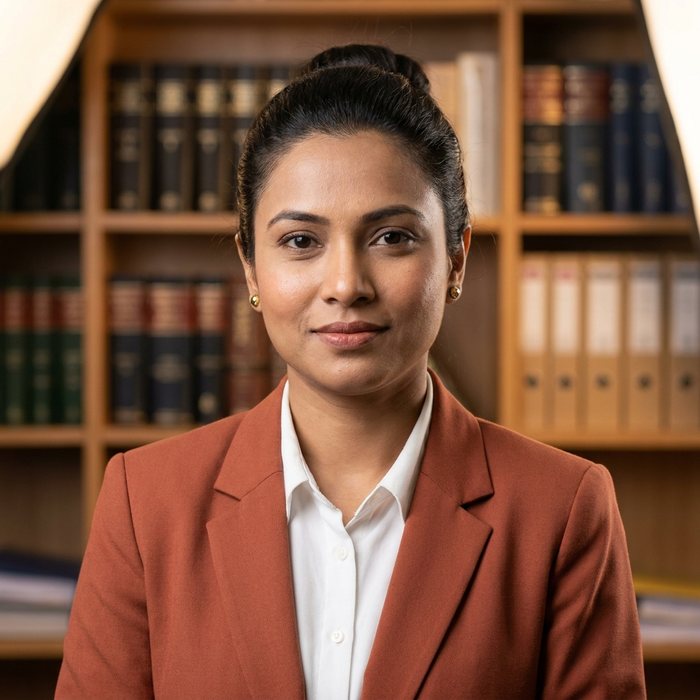
Legal Counsel
Human rights lawyer leading the Apon Jononi referral network, vetting the partner advocates callers are referred to and overseeing safeguarding and data handling.
We recruit field researchers and clinicians for each camp cycle, and take on organisational partners year-round.
Where We Work
Take Part
Registration for the 2026 research cycle is open, and the four programmes are described in full if you would rather start there.