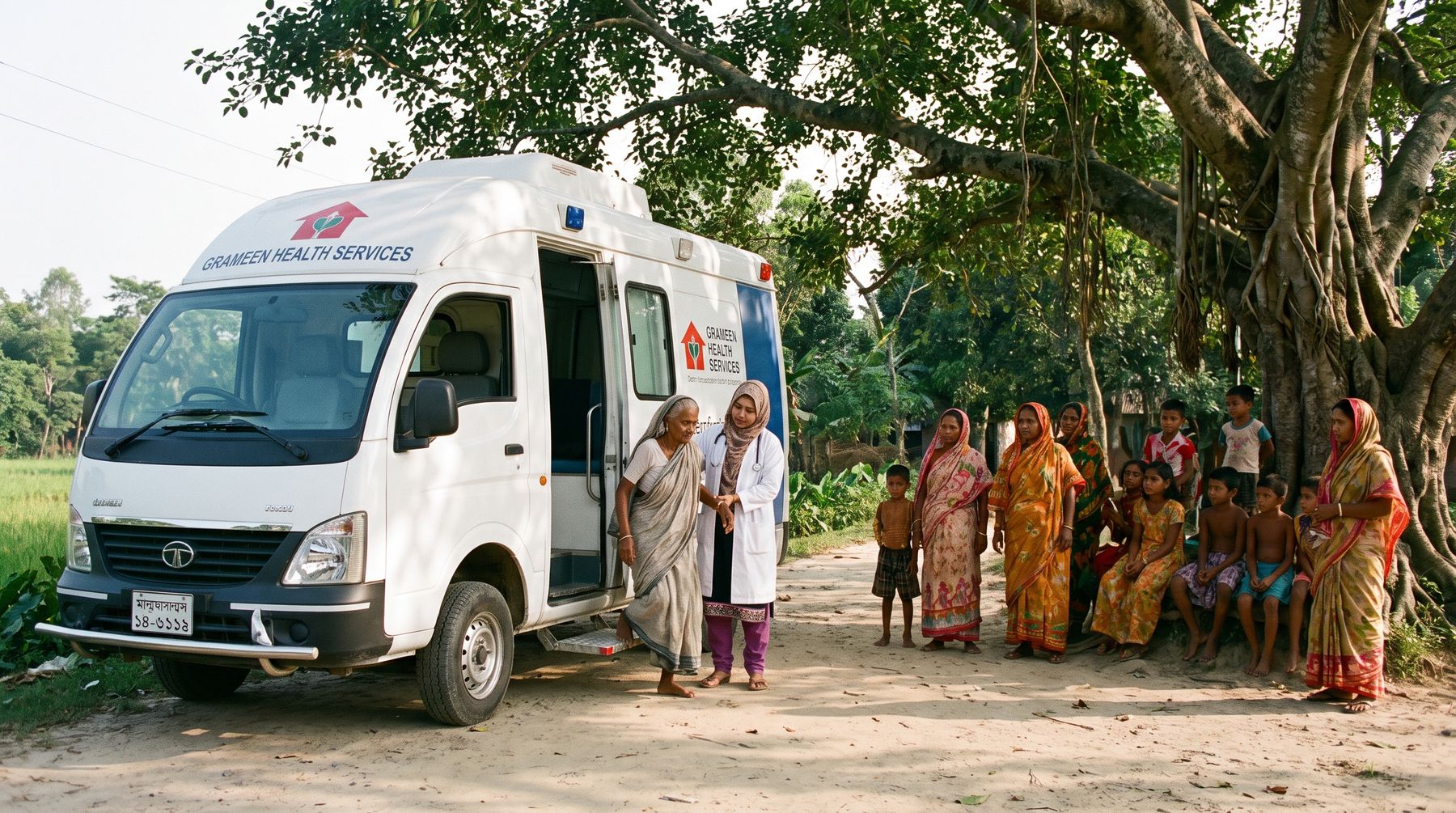
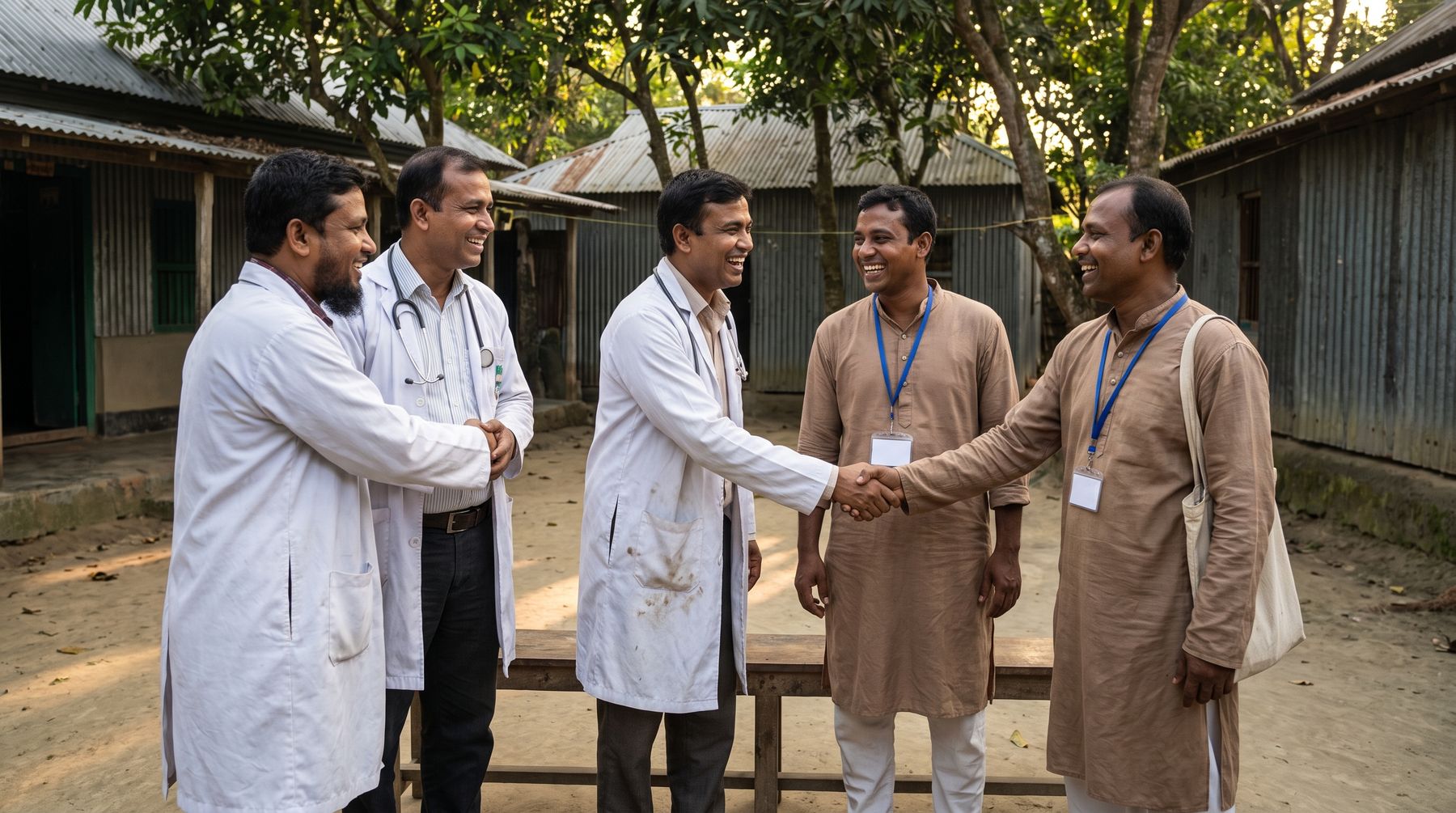
Swasthya Kendra sends branded mobile vans into villages in Sylhet, Khulna and Mymensingh divisions where the nearest staffed upazila health complex is more than an hour away by road. Each van carries a female physician, two paramedics and a community mobiliser, and offers free cervical and breast screening, antenatal checks, prenatal vitamins, family-planning counselling and referral for anything the van cannot treat on site.
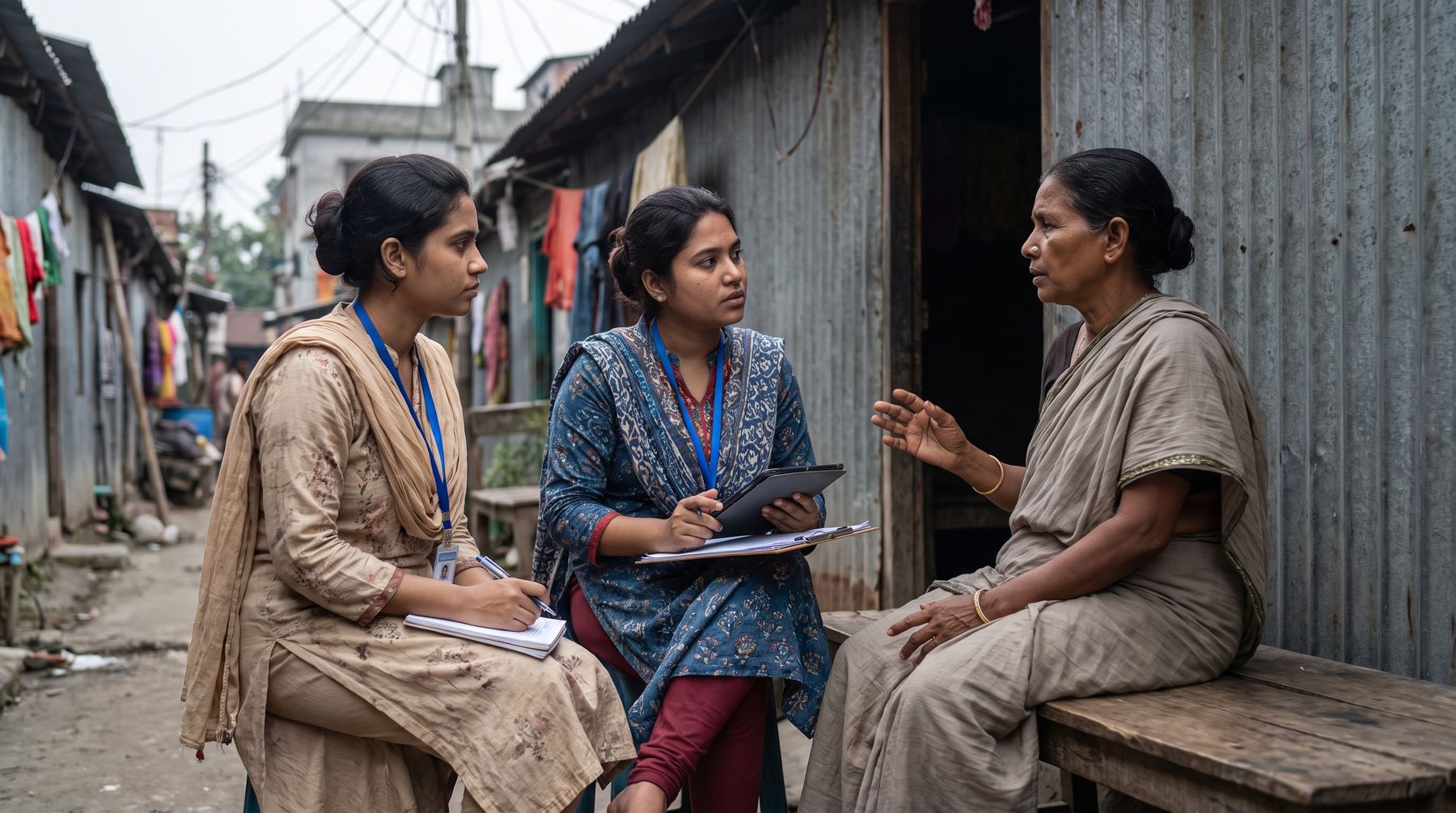
The cycle is fixed so that women can plan around it. Roughly three weeks ahead, local women's groups and the union parishad circulate notice of the dates. The camp itself runs for two days, long enough for women who could not leave the house on the first morning to come on the second. Anyone who needs care beyond screening is referred to a named partner clinic with a written slip, and the same van returns to the same village the following quarter to check who actually reached that clinic and who did not.
That return visit is the part of the programme we treat as non-negotiable. A screening camp that never comes back records findings; a camp that comes back records outcomes, and the gap between the two is where most rural health programmes quietly lose the people they set out to serve.
- Partnered with 30 local clinics.
- Two-day camps, followed by a return visit in the next quarter to trace referrals.
- All clinical staff on the vans are women — the single most common request in our 2019 community consultation.
- Screening, antenatal checks and prenatal vitamins are free at the point of care; onward treatment costs depend on the partner clinic.
What the camps cannot do
The vans are not equipped for delivery, surgery or emergency obstetric care. Where a woman needs any of those, the team's role is to arrange transport and a referral to a facility that is — not to treat on site.